
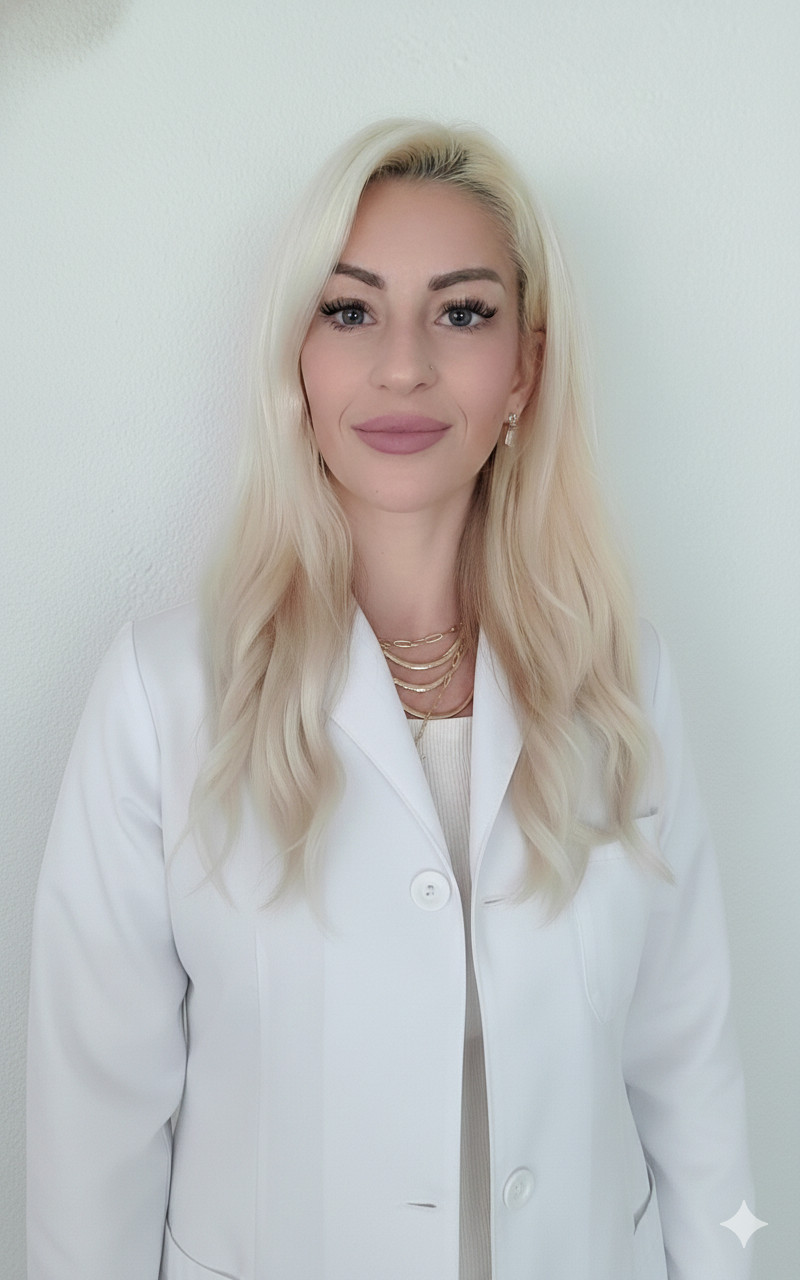
Darla Dane, PMHNP-BC — Women's Hormonal Psychiatry Specialist
TL;DR: Darla Dane, PMHNP-BC is a board-certified Psychiatric Mental Health Nurse Practitioner specializing in women's hormonal and reproductive psychiatry and ADHD at Skye Mental Health. This page covers her clinical background, why she left corporate mental health to specialize in hormonal psychiatry, her approach to PMDD, perimenopause, and menopause treatment, and her full credentials and training history.
Why Darla specializes in hormonal psychiatry
Before co-founding Skye Mental Health, Darla Dane worked for one of the largest mental health organizations in Michigan. She was good at her job, she cared about her patients, and she watched the system fail them anyway.
What she saw, over and over, was a particular kind of patient: women in their 30s, 40s, and 50s who had been feeling genuinely unwell for months or years. Mood instability that arrived like clockwork before their period. Anxiety that appeared out of nowhere in perimenopause. Brain fog so severe it was affecting their careers. Sleep that had completely collapsed. Rage that felt entirely out of character. A sense of not recognizing themselves anymore.
These women had often already been to their OB-GYN, who ran hormone panels that came back normal and offered little else. They had been to their primary care doctor, who suggested stress reduction or weight loss. Some had tried antidepressants that didn't quite work, or worked for a while and then stopped, because the underlying hormonal driver was never identified or addressed.
When they finally reached a psychiatric clinician, what they needed was time. Time to map the pattern of their symptoms. Time to understand the relationship between their hormonal cycle and their mental health. Time to distinguish between a standalone mood disorder and a neurochemical event driven by hormonal fluctuation. Time to order labs, review results in context, and monitor how medications interacted with their individual physiology.
What the system gave them instead was 15 minutes and a prescription.
The organization Darla worked for — like most large mental health companies in Michigan today, now owned by private equity and Wall Street firms — measured success in volume. Twenty to twenty-two patients per day. See them, prescribe, move on. Clinicians who invested time with complex patients were working against the model, not within it. The incentive was throughput. The casualty was the kind of careful, longitudinal care that hormonal psychiatry actually requires.
Darla left because she was unwilling to keep practicing that way. She co-founded Skye Mental Health because the women she was seeing deserved a clinician who would take the time to understand what was actually happening in their bodies and minds — not hand them a script and schedule a 10-minute follow-up in three months.

What to expect as Darla's patient
Darla's approach begins with a question most clinicians never ask: when do your symptoms happen?
Timing is diagnostic in hormonal psychiatry. Mood that crashes in the two weeks before your period and lifts when it begins tells a different clinical story than mood that is consistently low regardless of cycle. Anxiety that intensified in your mid-40s and has never resolved tells a different story than anxiety you have managed since your 20s. The pattern of your symptoms across your hormonal timeline is often the most important piece of clinical information available — and it is almost never collected in a standard psychiatric evaluation.
Darla's initial appointments run 60 minutes. She will spend that time building a detailed picture of your symptoms, your hormonal history, your menstrual cycle or menopausal transition, any labs you have had done, and every treatment you have tried. Where labs are clinically relevant, she will order them and interpret them in the context of your symptoms — not use them as a gatekeeper to dismiss what you are experiencing.
Follow-up appointments are 30 minutes or longer. Medication management for hormonal psychiatric conditions is not a set-it-and-forget-it process. Darla monitors how you are responding, adjusts as your hormonal picture changes, and maintains the kind of ongoing clinical relationship that makes treatment actually work over time.
She does not practice assembly-line psychiatry. That is not a marketing phrase — it is the specific reason she left corporate mental health and built a practice of her own.
Credentials and training
-
PMHNP-BC — Board Certified Psychiatric Mental Health Nurse Practitioner
-
University of Toledo
-
University of Toledo
-
University of Toledo
-
RN — Michigan; CNP — Michigan
-
PMHNP at Thriveworks, Grand Rapids MI; RN at Regency Hospital, Sylvania OH; Community Health Worker; Home Health Aide
-
Women's hormonal and reproductive psychiatry (PMDD, perimenopause, menopause, postmenopause), ADHD (all ages)

Conditions
Darla treats
PMDD (Premenstrual Dysphoric Disorder)
Perimenopausal anxiety, depression, and mood instability
Menopausal and postmenopausal psychiatric symptoms
Hormonal depression and cyclical mood disorder
ADHD in adults and teens
Anxiety disorders
Depression
Trauma and PTSD
Bipolar disorder
OCD